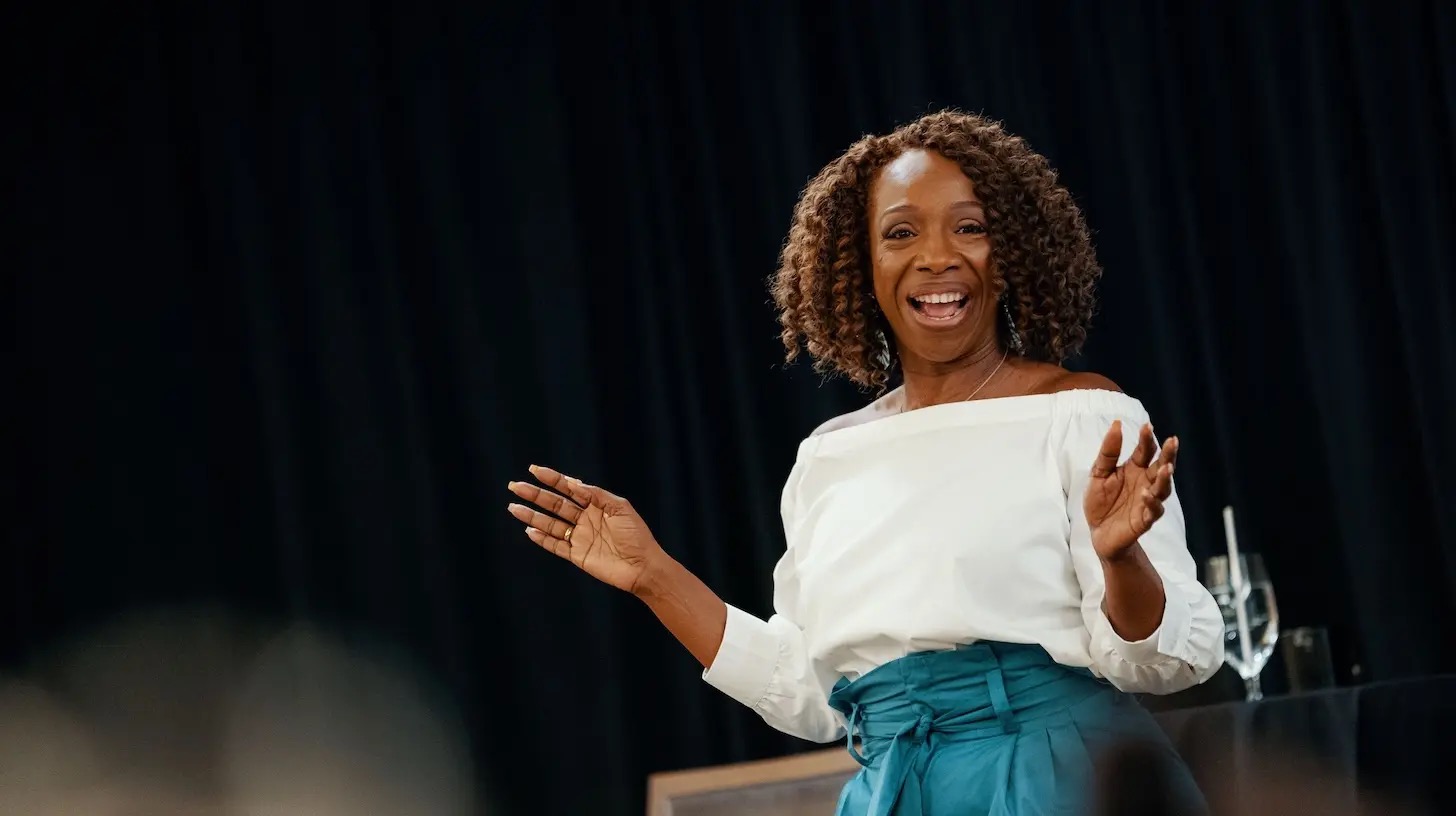
When most people watch a keynote speaker, they see forty-five minutes.
They don’t see the months before it.
They don’t see the books spread across the desk, the research papers highlighted in different colours, the long walks rehearsing ideas out loud, or the evenings spent standing in front of a television remote in one hand, imagining an audience that isn’t there yet.
They certainly don’t see the moments where an idea that looked brilliant on paper quietly dies because it simply doesn’t land in front of real people.
That’s the part I’ve always loved.
Because professional keynote speakers don’t just write talks.
They develop them.
Over the past few months, I’ve been building a new keynote called Commanding the Room: The Body Language of Leadership.
It’s a keynote exploring the science of first impressions, trust, charisma and leadership presence. But before I ever considered taking it to conferences, I wanted to answer a far more important question.
Would it genuinely create an experience worth giving an audience forty-five minutes of their time?
The first test
The keynote’s first outing wasn’t in front of paying clients.
It was delivered to the University of the Third Age in Christchurch.
The audience wasn’t made up of communication specialists or keynote speakers.
It was made up of people who have spent decades leading, teaching, governing, building businesses and contributing to their communities.
Former ministers, doctors, lawyers, accountants, educators and lifelong learners.
If a keynote couldn’t hold the attention of a room like that, it wasn’t ready.
Within minutes I could feel something happening.
People weren’t simply listening.
They were laughing.
They were gasping.
They were writing notes.
They were looking at each other differently.
Most importantly, they were becoming part of the keynote rather than watching it.
One audience member later asked whether I would be willing to coach every future speaker before they presented to the group.
That wasn’t because of me.
It was because of the experience they had just shared.
The second test
Rather than immediately taking the keynote to market, I wanted to experience it through a completely different medium.
So I invited people to an exclusive online premiere.
Not because webinars are the future home of the keynote.
Quite the opposite.
Because I wanted to test the material under different conditions.
Something fascinating happened.
The keynote still taught.
People still learned.
The feedback was overwhelmingly positive.
But I also realised something important.
The keynote wasn’t the thing being tested.
The delivery medium was.
Activities that take seconds in a theatre become slower online.
Audience interaction feels different.
Momentum changes.
Energy shifts.
That wasn’t a weakness in the keynote.
It was a characteristic of the platform.
And it reinforced something I’ll carry into every keynote I develop from now on.
Always ask whether it’s the material… or the medium.
They’re not the same thing.
Watching the audience changed everything
One of the most valuable parts of the process happened after both presentations had finished.
I watched the recordings.
Not to critique myself.
To study the audience.
When you’re presenting, you’re concentrating on delivering the experience.
Watching it back lets you experience the keynote from the other side.
I slowed sections down.
I watched faces.
I noticed smiles I’d missed.
I saw people leaning forward.
I caught moments where an entire room gasped together.
I watched people quietly writing notes.
It reminded me that the audience tells you far more than applause ever can.
The biggest lesson
The keynote explains why body language matters.
It explains how body language shapes trust, confidence and credibility.
But I realised it could finish even stronger.
People don’t simply want awareness.
They want somewhere to begin.
So the next version of the keynote won’t contain more research.
It will contain more application.
More opportunities for people to experience positive body language for themselves.
More practical behaviours they can immediately take away.
Not because audiences need more information.
Because they deserve transformation.
Advice rarely changes behaviour
One of the biggest lessons I’ve learned over twenty-five years of coaching leaders and professionals is this.
Advice rarely changes behaviour.
Awareness does.
I remember working with a coach who was convinced she had an approachable coaching style.
When we watched the recording together, she stopped halfway through.
“I had no idea I looked like that.”
She wasn’t being aggressive intentionally.
But her body language told a completely different story.
Nobody needed to tell her what to change.
She could see it for herself.
That’s when real change happened.
Body language isn’t about becoming someone else.
It’s about becoming aware of what everyone else has been seeing all along.
Why I don’t launch keynotes straight onto conference stages
People sometimes ask why I spend so much time developing a keynote before taking it to conferences.
The answer is simple.
Because conference audiences deserve better.
If I’m still trying to work out whether a story lands…
If I’m still wondering whether an activity works…
If I’m still figuring out the flow…
Then my attention is on me.
Not on the audience.
That isn’t fair to the people who have invested their time to be there.
A conference audience shouldn’t be paying to watch a speaker discover their keynote.
They should experience one that’s already been thoughtfully developed, tested, challenged and refined.
The philosophy I’ll carry into every keynote
Building Commanding the Room reminded me of something I never want to forget.
Great keynote speaking isn’t about delivering information.
It’s about creating experiences that change the way people think.
That’s why I believe conference audiences deserve more than a well-written keynote.
They deserve one that’s been thoughtfully developed, tested and refined long before the lights come up.
Because when the keynote is better…
The audience wins.
The conference organiser wins.
And the speaker gets to do what matters most.
Stop thinking about their own performance…
…and start thinking about the experience they’re creating for everyone else.