There are moments in your career when you find something that doesn’t just add to what you know.
It reorganises it.
That happened to me when I rediscovered the research of Professor John Antonakis into what he calls the Charismatic Leadership Tactics.
The funny part is, I had already found the research years earlier.
I’d read the Harvard Business Review article.
I’d thought:
“This is interesting.”
Then, somehow, I parked it.
Two years later, I found the article sitting in my bookmarks, opened it again, and this time my reaction was very different.
Holy shit.
This wasn’t interesting.
This was the Da Vinci Code.
I’d been using some of it without knowing
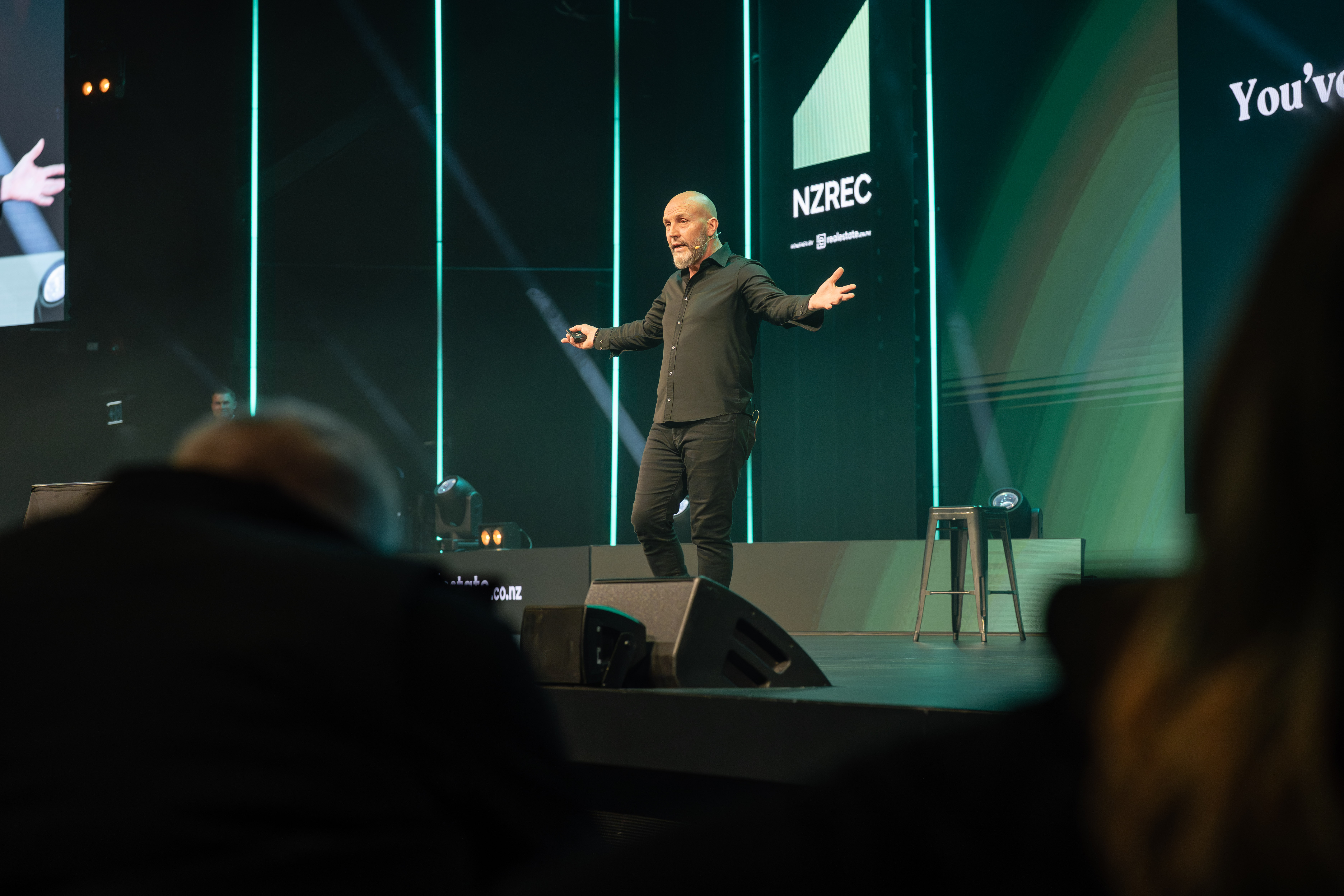
One of the stories I tell in my keynote goes right back to the first three presentations I ever delivered.
I was inexperienced.
I didn’t really know what I was doing.
But I knew I had to try something different.
So I did.
And somehow, I had audiences hanging on the edge of their seats.
At the time, I couldn’t explain why it worked.
I just knew that something had changed.
Years later, when I properly understood Antonakis’s research, I suddenly had an answer.
Without realising it, I had already been using some of the behaviours he and his colleagues would later identify and measure as Charismatic Leadership Tactics.
Stories.
Contrast.
Three-part lists.
Animated delivery.
Gesture.
Vocal variation.
Language designed to create pictures in people’s minds.
What had happened by chance, I could now start doing by consequence.
That changed everything.
Charisma stopped being mysterious
For years, charisma was treated as one of those strange human qualities that some people simply seemed to possess.
You’d hear people say:
“They’re just charismatic.”
As though that explained anything.
It didn’t.
Antonakis and his colleagues did something far more useful.
They broke charisma down into observable behaviours.
That mattered enormously to me because it meant charisma was no longer some mystical quality reserved for the naturally gifted.
It became something that could be studied.
Practised.
Measured.
Refined.
And developed.
That idea aligned deeply with what I already believed about speaking.
Speaking well is not a God-given talent that you either have or you don’t.
It is a learnable skill.
The result of dedication, determination and discipline.
Antonakis gave me another layer to that belief.
Charisma could be learned too.
The blueprint behind great speakers
Once I understood the framework, I started seeing it everywhere.
Tony Robbins.
Barack Obama.
Martin Luther King Jr.
Winston Churchill.
Different eras.
Different personalities.
Different messages.
Yet underneath the surface, many of the same communication patterns kept appearing.
Metaphors.
Stories.
Contrast.
Rhetorical questions.
Moral conviction.
Expressions of shared sentiment.
Three-part lists.
Confidence in goals.
Animated voice.
Facial expression.
Gesture.
The fascinating thing is that many of these speakers were using these techniques long before the research formally described them.
They didn’t have a checklist.
They simply knew what worked.
Antonakis gave us the checklist.
What changed in my own keynotes
The biggest change was intentionality.
Before studying the research properly, I used stories, but they were often more ad hoc.
Afterwards, stories became structural.
I started asking:
Why is this story here?
What does it connect?
What does it make the audience feel?
What idea does it help them remember?
I became much more deliberate about contrast.
I started consciously using groups of three.
At one point I even mapped sections of a presentation physically across the stage to reinforce a three-part structure.
I became more conscious of gesture.
More conscious of vocal delivery.
More conscious of moral conviction.
More conscious of how language could create images in the mind.
And because I teach these skills constantly, I’m also constantly rehearsing them.
What I teach other people to do becomes part of what I practise myself.
That creates a useful loop.
Teach it.
Practise it.
Use it.
Refine it.
Then teach it better.
Stories are still the tactic I come back to most
Of all the Charismatic Leadership Tactics, storytelling has probably had the greatest influence on my keynote speaking.
My presentations today are full of stories.
Not random stories.
Purposeful ones.
And something fascinating has happened as a result.
People remember them.
More than once, I’ve had someone repeat back to me the story of the King, the Wise Counsellor and the Two Pigs more than a year after hearing me speak.
People have repeated my three-part phrase back to me too:
“Dedication, determination and discipline.”
That tells me something important.
When communication works, it travels.
The message leaves the room with the audience.
The strange power of mythology
One thing I’ve noticed over time is that the stories people remember most often aren’t necessarily the factual ones.
They remember the mythological ones.
The parables.
The folktales.
The strange little stories with kings, wise counsellors, magicians and pigs.
That fascinates me.
I can tell people a factual story about my own speaking journey and they may enjoy it.
But give them a well-structured parable and, a year later, they can sometimes tell it back to me.
I don’t think that’s an accident.
Those old stories have survived for hundreds or thousands of years precisely because they contain patterns humans remember.
Conflict.
Contrast.
Character.
Emotion.
Meaning.
Moral consequence.
In many ways, they already contain charismatic communication techniques built into them.
That is something I’m continuing to explore in my own work.
The research proved something important
One of the things I most value about Antonakis’s research is that it challenged the assumption that charisma is really just another name for attractiveness, confidence or natural presence.
The experiments were designed to separate those effects.
Average people.
Average appearance.
No obvious advantage from status or physical presence.
Teach them the tactics.
Measure what changes.
And something changed.
People perceived them differently.
That matters.
Because if you only study people who are naturally striking, unusually confident or already famous, it is easy to assume charisma belongs to them because of who they are.
Antonakis demonstrated that behaviour itself can change perception.
That is incredibly empowering.
But charisma is a double-edged sword
There is another side to all of this.
Charisma is influence.
And influence is not automatically good.
History gives us plenty of examples of highly charismatic people using communication as a weapon.
The skills themselves are neutral.
The values behind them are not.
That is why I believe charisma carries responsibility.
In the hands of someone compassionate, kind, caring and purposeful, these techniques can help people lead change.
They can help good ideas travel further.
They can help people inspire action.
They can help leaders communicate with greater clarity and conviction.
In the wrong hands, those same skills can manipulate, divide and destroy.
That distinction matters to me enormously.
I want to help good people become more influential.
Not simply more persuasive.
I asked John directly
At some point, I decided I didn’t want to simply use Antonakis’s research and hope that was fine.
So I found his email address and contacted him.
I explained who I was.
I told him how much I valued the research.
And I asked whether he was comfortable with me using the Charismatic Leadership Tactics directly in my own work.
He came back and said yes.
Use it.
Share it.
The more people who understand it, the better.
I was genuinely thrilled.
There was something deeply satisfying about having permission directly from the person whose research had influenced so much of my thinking.
It also gave me enormous confidence to continue building on the work while always acknowledging where it came from.
The challenge I’ve set myself
I still don’t think I use all 12 Charismatic Leadership Tactics as effectively as I could.
That excites me.
Because it means there is still another level.
One of my ongoing challenges is to build a keynote where every one of the 12 tactics is deliberately present.
Not forced.
Not shoehorned into the presentation.
Naturally integrated.
So that if someone analysed the keynote afterwards, they could identify every one of them clearly.
That is part of what keeps me fascinated by this craft.
There is always another level of mastery.
What studying John Antonakis changed for me
Studying John Antonakis changed me as a keynote speaker because it gave me a set of skills I could consciously develop.
It turned charisma from something mysterious into something practical.
It gave me a roadmap.
And that roadmap continues to shape the way I write, rehearse and deliver keynote presentations today.
Twenty-five years ago, I accidentally stumbled across some of these behaviours and discovered that they worked.
Antonakis helped me understand why.
Now I get to use them deliberately.
And I’m still learning.
Your Observation Challenge
I’ve embedded John Antonakis’s TEDx presentation below.
As you watch it, don’t just listen to what he says.
Watch how he says it.
Look for the tactics inside the presentation itself.
Notice the metaphors.
The rhetorical questions.
The three-part lists.
The contrasts.
The stories.
The shared sentiments.
The delivery.
He isn’t just explaining charisma.
He is demonstrating it.
And once you learn to see these patterns, you start seeing them everywhere.